
The 1976 Bicentennial Quarter is one of America’s most iconic circulating coins, released to celebrate the 200th anniversary of the nation’s independence. With its unique drummer boy reverse design by Jack L. Ahr, this quarter remains a favorite among collectors. While millions were minted, a small number of special varieties and error pieces can still be found in everyday circulation — and these are the ones worth keeping an eye out for.
Below is a clear, realistic, and collector-focused guide to the most valuable Bicentennial quarters still found in circulation today.
Why the 1976 Bicentennial Quarter Is Special
-
First circulating U.S. quarter with a special one-year commemorative design
-
Struck in Philadelphia (no mint mark), Denver (D), and San Francisco (S)
-
Some rare varieties were minted in 40% silver
-
Attracts both novice and advanced collectors
Most Collectible & Valuable Bicentennial Quarters Still Circulating
1. 1976-D Bicentennial Quarter – High-Grade Circulated Condition
Most Bicentennial quarters are worth face value, but Denver-minted coins in sharp, lightly circulated condition can sell for $1–$5 because they survive less often in near-original detail.

Why it matters:
-
Denver quarters were heavily used in circulation
-
Well-preserved coins are scarcer
2. 1976 Philadelphia (No Mint Mark) Quarter – Strong Strike
Philadelphia coins generally have weaker strikes, so finding one with:
-
bright luster
-
sharp drummer boy details
-
crisp lettering
…is uncommon. Such coins may bring $2–$8 depending on condition.
Still circulates because:
-
High mintage
-
Most people don’t check for strike quality
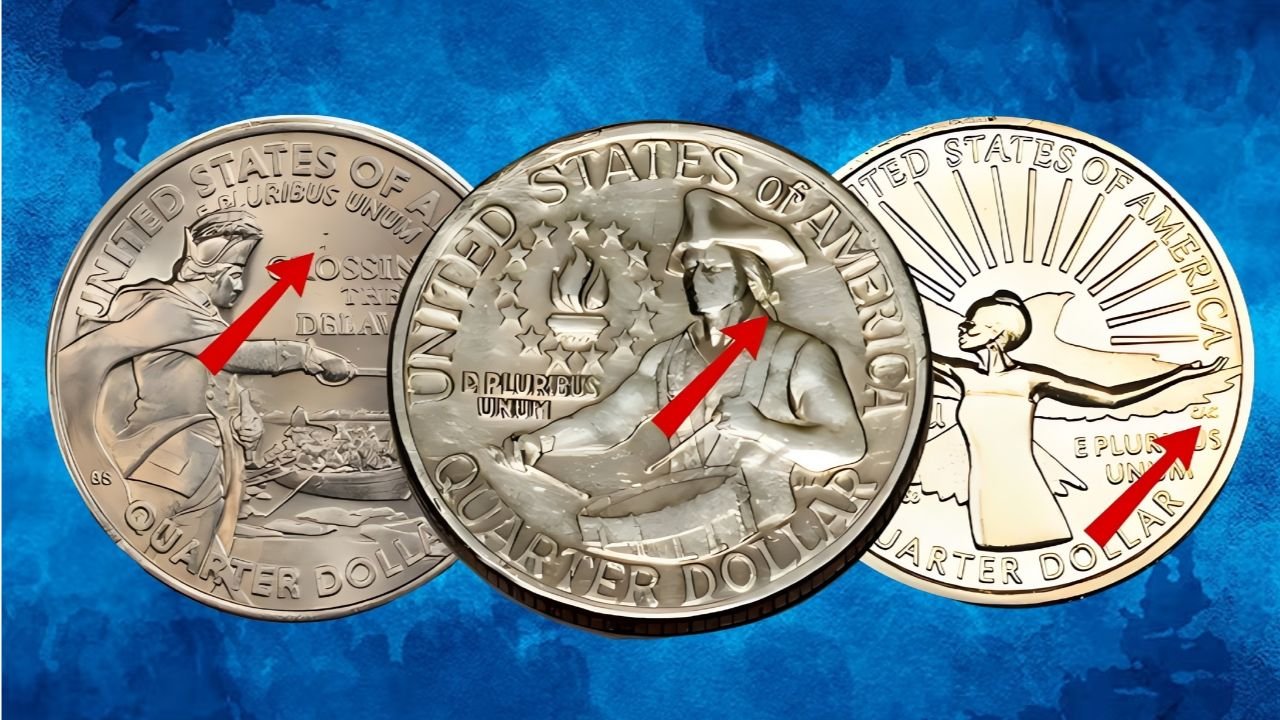
3. 1976-S Clad Proof Quarter (Some Still Found in Circulation)
Although proof coins were sold in sets, many entered circulation when sets were broken open.
How to identify:
-
Mirror-like fields
-
Frosted devices
-
“S” mint mark
A circulated proof Bicentennial quarter sells for $1–$3, but a lightly circulated one can bring $5–$10.
4. 1976-S 40% Silver Quarter (Rarely Found in Circulation)
These were made only for collectors, but occasionally show up in pocket change.
How to Identify a Silver Bicentennial Quarter
-
“S” mint mark
-
Distinct silver edge (no copper ring)
-
Slightly heavier look

-
Clearer ring when dropped
Value:
-
Circulated silver quarter: $4–$7 (silver melt value)
-
Lightly circulated: $8–$12
Rare Bicentennial Error Quarters Worth Searching For
1. Double Die Obverse (DDO)
Some Philadelphia quarters show doubling on:
-
IN GOD WE TRUST
-
LIBERTY
-
Date (1776–1976)
Value:
-
Circulated: $20–$150
-
Sharp examples: $250+
2. Double Die Reverse (DDR)
Doubling appears on:
-
Drummer’s drumsticks
-
Drum lines
-
USA or “QUARTER DOLLAR” lettering
Value:
$30 to $200+ depending on clarity.
3. Off-Center Strike Bicentennial Quarter
If part of the design is missing due to misalignment, it becomes collectible.
Value:
-
5%–10% off-center: $15–$50
-
20%–40% off-center: $75–$150
4. Clipped Planchet Error
A curved clip on the edge results from a blank cutting mistake.

Value:
$20–$60 depending on size and condition.
5. Wrong Planchet Errors (Very Rare)
A Bicentennial quarter struck on a:
- dime planchet
- nickel planchet
- cent planchet
…can be extremely valuable.
Value:
$500 to $1,500+ depending on the planchet and condition.
How to Tell if Your Bicentennial Quarter Is Valuable
Check for the following:
- ✔ Silver edge or “S” mint mark
- ✔ Proof-like mirrored surfaces
- ✔ Any doubling on text or devices
- ✔ Visible striking errors
- ✔ Sharper-than-normal details
If your coin stands out from typical pocket change, it may be worth grading or selling.
Conclusion
While the majority of 1976 Bicentennial quarters are worth 25 cents, certain errors, high-grade examples, proofs, and silver varieties can be surprisingly valuable — and many are still found in everyday circulation. For collectors and casual hobbyists alike, checking your change is still one of the easiest ways to discover a hidden collectible.